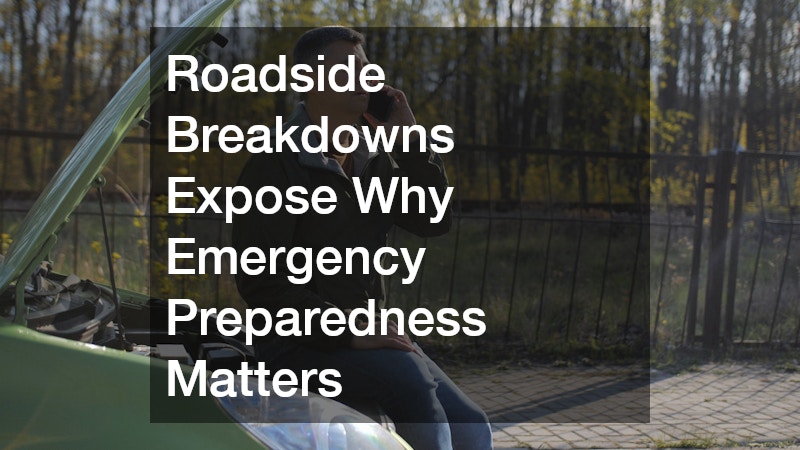
A breakdown never happens at a convenient time or place. One minute you are cruising down the highway, and the next you are pulled onto the shoulder with hazard lights blinking, wondering who to call and how long you will be stranded. These moments reveal just how unprepared most drivers are for a mechanical emergency, and they often become expensive lessons learned the hard way. This article walks through the practical steps every driver and vehicle owner should take before, during, and after a roadside emergency so you are never caught off guard.

Recognizing the Warning Signs Before a Breakdown Happens
Most breakdowns do not happen without warning. Strange noises, dashboard lights, fluid leaks, and sluggish acceleration are all signals that something is wrong under the hood, and ignoring them almost always leads to a bigger problem later. Paying attention to these early signs and scheduling auto repair before a small issue becomes a roadside emergency can save you time, money, and stress.
- Grinding, squealing, or knocking sounds while driving
- Dashboard warning lights that stay illuminated
- Puddles of fluid under the vehicle after parking
- Vibrations or pulling sensations while braking or steering
- A noticeable drop in fuel efficiency or engine power
Building a Relationship With a Trusted Repair Shop
Having a reliable mechanic you trust is one of the best forms of emergency preparedness, because you already know who to call when something goes wrong instead of scrambling to find help. Owners of specialty vehicles, like those with an Infiniti, often need a shop familiar with the brand’s specific electronics and performance systems. Seeking out a shop that offers Infiniti auto repair experience means diagnostic tools and replacement parts are matched to the vehicle, reducing the chance of repeat visits for the same issue.
Building this relationship before an emergency happens also means you can ask questions about maintenance schedules, warranty coverage, and typical repair costs ahead of time. A shop that knows your vehicle’s history can often diagnose problems faster because they already have records of past repairs and inspections.
Understanding When Collision Damage Needs Professional Attention
Not every roadside incident involves a mechanical failure. Fender benders, deer strikes, and minor collisions can leave your vehicle driveable but visibly and structurally compromised. In these situations, a visit to an auto body shop is necessary to assess whether the frame, alignment, or safety systems have been affected beyond the surface damage. Even a low-speed impact of 10-15 mph can misalign a frame or crumple zone in ways that aren’t visible to the untrained eye.
Warning signs include a car that pulls to one side, uneven tire wear appearing shortly after the incident, doors or trunks that no longer close flush, or dashboard warning lights for airbags and stability control. Any of these symptoms warrant a professional inspection rather than a wait-and-see approach. A qualified auto body shop can also check components that are easy to overlook, such as sensor calibration for driver-assist systems, radiator and headlight mounts, and hidden rust or cracking around impact points. Deer strikes, in particular, often cause underbody damage to fuel lines or suspension components that isn’t obvious from a visual check alone.
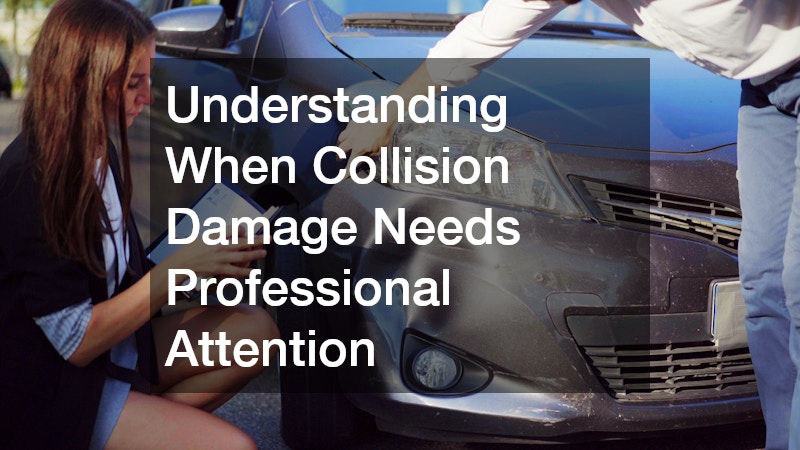
Delaying this assessment can turn a manageable repair into a safety hazard. A compromised frame affects how a vehicle absorbs impact in a future collision, and unresolved alignment issues accelerate tire and suspension wear. Getting a professional evaluation soon after any collision, however minor it seems, protects both your safety and your long-term repair costs.
Cosmetic damage might seem minor, but cracked bumpers or misaligned panels can hide deeper issues like damaged sensors, bent frame rails, or compromised crumple zones. Modern vehicles pack radar units, cameras, and parking sensors into bumpers and fenders, so even a low-speed fender bender can knock a safety system out of calibration without leaving an obvious mark.
A body shop technician can spot these hidden red flags: uneven panel gaps, paint that looks slightly off in color or texture, or doors that no longer close flush. Getting a professional auto body repair estimate quickly after an incident, ideally within a few days, ensures small problems do not turn into larger safety concerns down the road. Waiting too long can allow corrosion to set into exposed metal, or let a minor alignment issue worsen every time you hit a pothole or speed bump. Estimates typically include a diagnostic scan, which catches electronic faults that a visual inspection alone would miss.
A prompt estimate also helps with insurance documentation while the damage is fresh. Photos, itemized repair costs, and technician notes create a paper trail that supports your claim and speeds up reimbursement. Insurers are far more likely to question damage that surfaces weeks after an incident, so early documentation protects both your safety and your wallet.
- Request a written estimate before authorizing repairs, including labor rates and parts costs broken down line by line
- Ask whether OEM or aftermarket parts will be used, since OEM parts typically cost more but preserve resale value and fit specifications
- Confirm the shop offers a warranty on completed work, ideally covering both parts and labor for at least 12 months
- Take photos of the damage immediately after the incident, capturing wide shots, close-ups, and license plates of all vehicles involved
- Get a second opinion if the estimate exceeds your deductible significantly, since repair quotes can vary by hundreds of dollars between shops
- Check whether the shop is certified by your vehicle’s manufacturer, particularly important for newer cars with advanced safety systems
- Ask how frame or structural damage will be assessed, since hidden misalignment can affect handling and safety long after visible repairs are complete
Preparing for Emergencies on the Water as Well as the Road
Emergency preparedness is not limited to cars and trucks. Boat owners face similar risks when engines stall, hulls take on water, or electrical systems fail far from shore. Knowing which boat repair services companies in your area offer emergency haul-outs or on-water assistance can be just as important as knowing your auto mechanic’s phone number.
Just like with vehicles, regular maintenance checks before the boating season begins can prevent many of the failures that leave boaters stranded. Keeping a list of trusted repair contacts, both marine and automotive, means you are never searching for help during an actual emergency.
Knowing the Difference Between Towing Options for Heavy Vehicles
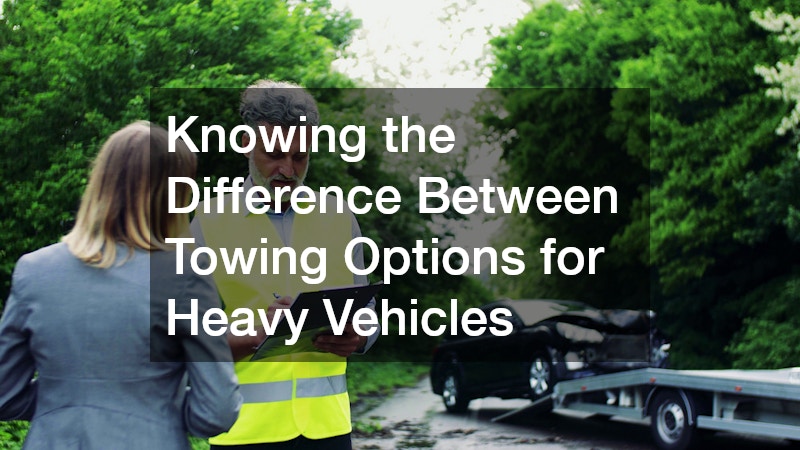
Not all towing situations are the same, and larger vehicles require specialized equipment and trained operators. If you drive a pickup, RV, or commercial vehicle, understanding truck towing options ahead of time can prevent delays when you need help most. Standard tow trucks are often not equipped to handle the weight and size of larger vehicles safely. Heavy-duty towing typically calls for flatbed carriers or wheel-lift trucks rated for gross vehicle weights well above what a standard tow truck can manage, sometimes exceeding 26,000 pounds.
A pickup towing a trailer, a fifth-wheel RV, or a box truck may need a rig with air brakes, extended ramps, or hydraulic winches to load and secure it properly. Using the wrong equipment risks damage to the vehicle’s frame, suspension, or drivetrain. Response times and availability also differ for heavy-duty calls. Fewer companies operate this specialized equipment, so drivers of larger vehicles should identify a qualified provider before an emergency happens, not after. Knowing your vehicle’s weight class and towing requirements in advance makes it far easier to get the right help quickly.
- Flatbed carriers for vehicles with drivetrain damage, all-wheel drive systems, or low ground clearance
- Heavy-duty wreckers (rated for 25+ tons) for semi-trucks, buses, and loaded trailers
- Winch-out services for vehicles stuck in mud, snow, or off-road ditches
- Specialized equipment and rigging for four-wheel drive vehicles to prevent drivetrain strain
- Rotator tow trucks for overturned vehicles or complex recovery angles
- Boom trucks for tight spaces where a flatbed can’t maneuver
Choosing a Towing Service That Operates Around the Clock
Breakdowns rarely happen during business hours, which makes availability one of the most important factors when choosing a towing partner. Searching for 24 hour towing companies in your area before you need one means you already have a number saved when a late-night emergency strikes. Response time, service area, and pricing transparency are all worth researching in advance rather than during a stressful moment on the shoulder of the highway.
It also helps to read reviews focused specifically on emergency response rather than general service quality, since a company’s speed and communication during a true emergency matter more than convenience during routine calls. Ask friends, family, or local mechanics for recommendations, since word of mouth is often the most reliable indicator of dependable service.
Knowing What to Expect When You Call for Roadside Assistance
When you call for help, the vehicle that arrives will typically be a tow truck equipped to load your car, truck, or SUV safely for transport to a repair facility. Depending on the situation, the dispatcher may send a flatbed tow truck for all-wheel-drive vehicles or a wheel-lift model for simpler jobs, so don’t be surprised if the equipment looks different than you expected.
Knowing basic details beforehand, like your exact location, vehicle type, and the nature of the problem, speeds up dispatch and reduces wait times significantly. Having your license plate number, VIN, and insurance or membership information on hand can also shave several minutes off the intake process. If you’re on a highway, note the nearest mile marker or exit number, since this is often more precise than a GPS pin when signal is weak.
Response times vary widely depending on your location and time of day, ranging anywhere from 15 minutes in urban areas to over an hour in rural or remote stretches. Many companies now offer app-based tracking so you can see exactly when help will arrive, along with the driver’s name, vehicle description, and a live map of their route. Some services also send text updates if the estimated arrival time changes, which is worth confirming when you first place the call.
- Know your vehicle’s make, model, year, and approximate weight — SUVs and trucks often need heavier-duty tow equipment
- Have your insurance policy number and roadside assistance membership number ready before you dial
- Note visible landmarks, mile markers, or exit signs so dispatchers can pinpoint your location quickly
- Use your phone’s GPS or maps app to share exact coordinates if you’re unsure of the address
- Keep your phone charged with a backup battery or car charger, since dead batteries are common during long waits
- Describe the problem clearly — flat tire, dead battery, overheating engine — so the right service is dispatched the first time
- Ask for an estimated arrival time and confirm whether you’ll get updates by text or call
Equipping Your Vehicle With Tools for Common Roadside Situations
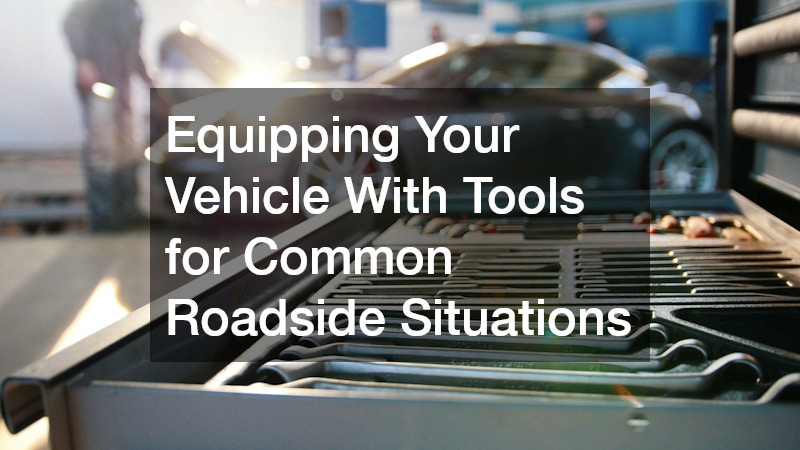
Beyond having a service to call, having the right supplies in your vehicle can help you handle minor issues yourself or stay safe while waiting for help. Many drivers customize their vehicles with practical truck accessories designed specifically for emergency situations, from bed-mounted toolboxes to portable air compressors and traction mats. These additions are especially valuable for drivers who frequently travel rural roads or job sites with limited cell service.
- Jumper cables or a portable jump-start battery pack
- Reflective triangles or flares for nighttime visibility
- A basic tool kit with tire pressure gauge and flashlight
- Extra coolant, oil, and washer fluid
- A first aid kit and emergency blanket
Turning Repairs Into an Opportunity for Vehicle Upgrades
When a vehicle is already in the shop after a breakdown or collision, it can be a practical time to consider upgrades that improve both function and appearance. Business owners with commercial fleets often use this window to invest in truck wraps, which not only refresh a damaged exterior but also serve as mobile advertising once the vehicle is back on the road. This turns an inconvenient repair visit into a chance to add long-term value.
Even personal vehicle owners can use downtime productively by asking their shop about protective coatings, updated lighting, or interior improvements. Combining necessary repairs with planned upgrades often saves on labor costs since the vehicle is already disassembled for other work.
Roadside breakdowns are rarely convenient, but they do not have to be catastrophic if you take the time to prepare in advance. Knowing your warning signs, keeping trusted repair and towing contacts on hand, and stocking your vehicle with the right tools can turn a stressful situation into a manageable inconvenience. Start today by researching local repair shops and towing services in your area so you have a plan ready before you ever need one.